
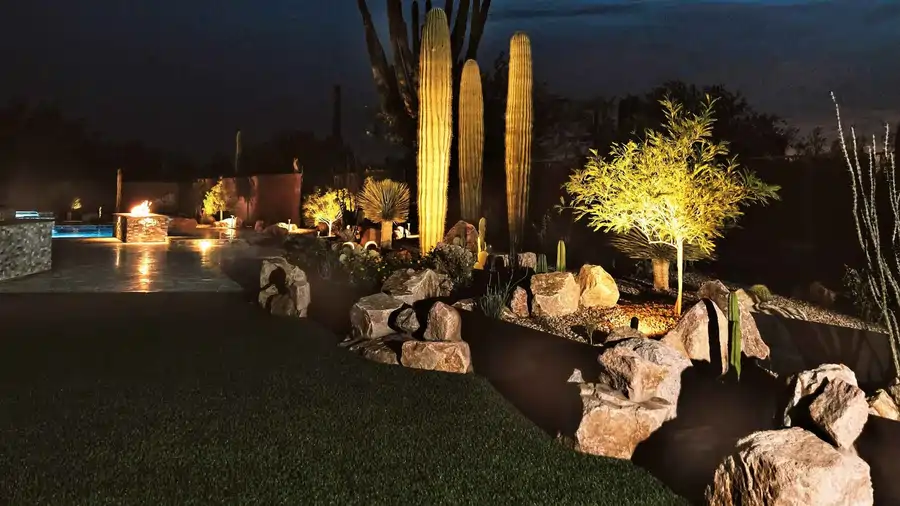
A beautiful pool area should feel like an extension of your home, not another project waiting on your to-do list. For Arizona homeowners who want a refined outdoor setting without constant trimming, watering, sweeping, or replanting, thoughtful landscape design can make all the difference.
Low-maintenance pool landscaping in Arizona combines desert-adapted planting, durable hardscape, efficient irrigation, and carefully planned lighting. The goal is not to remove every living element from the yard. It is to create a balanced environment that looks polished, feels inviting, and remains manageable through the changing seasons.
When the pool, planting, walkways, seating areas, and lighting are planned together, the entire backyard feels more intentional. Each feature supports the next, helping the space look complete while making it easier to use and maintain.
What Makes Pool Landscaping Low-Maintenance?
Low-maintenance landscaping is not the same as no-maintenance landscaping. Every outdoor space needs some level of care, especially in a climate shaped by intense sun, seasonal heat, dust, and monsoon weather. The difference lies in how often that care is needed and how easily it can be completed.
A successful design reduces unnecessary work from the beginning. It avoids plants that quickly outgrow their location, materials that are difficult to clean, narrow areas that are hard to access, and decorative features that do not serve the way the backyard is actually used.
The most effective Arizona pool landscaping plans begin with a clear structure. They use well-defined circulation paths, appropriately sized planting areas, durable surfaces, and open spaces that make the pool easy to enjoy. Instead of adding features one at a time, the yard is treated as one complete outdoor environment.
Begin With the Way the Backyard Will Be Used
Before selecting plants or decorative materials, it helps to think about the experience you want the backyard to provide. A pool designed mainly for family recreation will have different landscaping needs than a quiet retreat or a space created for frequent entertaining.
Consider how people will move from the house to the pool, where they will sit, which areas need shade, and what views should be emphasized. The landscape should guide movement naturally without making the space feel crowded or overly controlled.
It is also important to consider what can be seen from inside the home. A thoughtfully placed tree, specimen plant, illuminated wall, or water feature can create an attractive focal point from a kitchen, living room, or primary bedroom. This helps the pool landscape feel connected to the home rather than limited to the area immediately surrounding the water.
Create Clear Zones Without Making the Yard Feel Divided
A well-designed pool landscape usually includes several functional areas. There may be a swimming zone, a shaded seating area, an outdoor dining space, a walkway, and a quieter section for relaxing.
These areas do not need to be separated by walls or heavy visual barriers. Changes in paving, planting height, overhead structures, or lighting can define each space more subtly.
For example, a wider area of decking may indicate a gathering zone, while a line of low desert planting can soften the transition into a lounge area. The objective is to make the backyard easy to understand and comfortable to move through while preserving an open, cohesive appearance.
Use Hardscape to Give the Landscape Structure
Hardscape includes the nonliving elements that organize and support the backyard, such as patios, pool decking, paths, steps, retaining walls, planters, seating walls, and outdoor structures.
Around a pool, these elements provide more than visual interest. They create stable surfaces for walking and gathering, reduce the amount of planted area that needs ongoing care, and help define how each part of the backyard will be used.
Clean edges and deliberate transitions can make even a relatively simple landscape look finished. When the pool coping, decking, pathways, and surrounding features share a coordinated palette, the space feels calmer and more luxurious.
Choose a Focused Material Palette
Using too many materials can make a backyard feel busy and disconnected. A more refined design often repeats a limited selection of colors, textures, or finishes throughout the space.
A stone used on a raised pool wall, for example, might also appear on an outdoor kitchen or fire feature. A paving material could continue from the patio toward the pool to create a stronger visual connection between the home and the water.
This type of repetition gives the landscape a sense of order. It can also simplify future upkeep because the materials are selected as part of one coordinated system rather than as unrelated additions.
Plan for Cleaning and Everyday Access
A beautiful material is not necessarily the right material for every location. Poolside hardscape should be selected with everyday use in mind, including foot traffic, furniture placement, drainage, exposure to sun, and routine cleaning.
The layout should also leave enough room to move around seating, reach equipment, access planting beds, and complete occasional maintenance without disturbing the rest of the landscape.
These details may not be the most noticeable part of the finished design, but they often determine whether the backyard remains comfortable and practical over time.
Select Plants That Suit the Arizona Climate
Plant selection is one of the most important parts of creating a low-maintenance pool environment. The goal is to bring softness, movement, shade, and color into the space without introducing more upkeep than the homeowner wants to manage.
Native and desert-adapted plants are often well suited to Arizona conditions because they can handle local sun and heat more successfully once established. However, climate suitability is only one consideration. Mature size, growth pattern, water needs, seasonal appearance, and placement around the pool should also influence each selection.
A plant that looks small at installation may become much wider or taller over time. Planning around its mature size helps reduce frequent pruning and prevents plants from crowding paths, walls, windows, or the pool’s edge.
Create a Lush Look Through Layering
Low-water landscaping does not have to feel sparse. A landscape can appear full and welcoming when plants are arranged in layers rather than scattered individually throughout the yard.
A layered design may combine taller architectural plants, medium-height shrubs, lower accent plants, and ground-level textures. The shapes and foliage can provide visual depth even when the overall number of plants is relatively controlled.
Repeating several plant varieties throughout the landscape can also create a stronger, more intentional look. Instead of filling every open area with something different, repetition gives the eye a sense of rhythm and helps the yard feel professionally designed.
Keep the Immediate Pool Edge Simple
Plantings closest to the water deserve special consideration. Heavily shedding plants can create additional cleanup, while thorny or sharply pointed varieties may be uncomfortable near walking routes and seating areas.
That does not mean the pool must be surrounded only by hardscape. Carefully placed planting beds can soften the pool’s edges and provide a more natural transition into the rest of the yard. The key is to leave enough separation between the plants and the areas where people swim, walk, sit, or place towels and furniture.
A more restrained approach around the immediate pool perimeter can reduce debris and improve circulation. Fuller planting can then be used farther from the water, where it can create privacy, frame views, and add visual depth without interfering with everyday use.
Coordinate Irrigation With the Planting Design
Efficient irrigation is an essential part of keeping Arizona landscaping attractive without creating unnecessary work or water use. Irrigation should be designed around the actual needs of the selected plants rather than applied evenly across every part of the yard.
Grouping plants with similar watering requirements can make the system easier to manage. Trees, shrubs, accent plants, and container plantings may not all need the same schedule or amount of water.
The system should also remain accessible after construction. Valves, emitters, and other components should not be placed where they are difficult to inspect or adjust. Planning for that access early can make routine maintenance much simpler.
As plants mature, irrigation may need to be reviewed and updated. A landscape that is designed thoughtfully from the beginning will make those adjustments easier to complete without disrupting patios, walls, or finished hardscape.
Make Lighting Part of the Original Design
Outdoor lighting should not be treated as an accessory added after the landscaping is complete. It affects how safely people move through the space, what features remain visible after sunset, and how the backyard feels during evening use.
A well-planned lighting design can guide people along walkways, illuminate steps and transitions, highlight specimen plants, and bring attention to architectural features. It can also give the water a softer visual presence when the pool is viewed from a patio or from inside the home.
For homeowners who regularly use their backyard in the evening, lighting is one of the most effective ways to extend the value of the space beyond daylight hours.
Layer Lighting Instead of Overlighting the Yard
Luxury outdoor lighting is rarely about making every area equally bright. The most inviting spaces use layers of light to create contrast, visibility, and atmosphere.
Pathway lighting supports movement through the yard. Accent lighting can emphasize trees, textured walls, water features, or planting beds. Task lighting provides more direct illumination around outdoor kitchens, dining areas, and other spaces where activities take place.
These layers should work together without creating glare. When fixtures are chosen and positioned carefully, the source of the light becomes less noticeable than the effect it creates.
Southern Arizona Pools incorporates custom lighting into its Arizona pool landscaping services, allowing the hardscape, plantings, pathways, and architectural details to remain visually connected after sunset. This coordinated approach supports both the practical use of the yard and the atmosphere homeowners want to create.
Connect the Pool to the Rest of the Outdoor Living Space
Pool landscaping should not stop at the edge of the decking. The strongest designs connect the pool to the patio, shade structures, outdoor kitchen, fire features, seating areas, and the architecture of the home.
This connection can be created through repeated materials, coordinated colors, aligned sightlines, or carefully planned walkways. It can also come from the placement of planting beds that visually lead from one part of the yard to another.
When the pool and surrounding landscape are designed separately, the backyard may feel fragmented. Even attractive individual features can appear disconnected if they do not share a common design direction.
Planning the complete environment together allows homeowners to make more informed choices about spacing, materials, lighting, and future additions. Southern Arizona Pools offers both custom pool design and construction and outdoor living and entertainment spaces, helping the pool, landscape, and gathering areas function as one cohesive backyard.
Common Mistakes That Create More Maintenance
Many maintenance problems begin during the design phase rather than after installation. Avoiding a few common mistakes can make a significant difference in how the landscape performs over time.
Adding Plants Only After the Pool Is Finished
When planting is considered too late, beds may be left with awkward dimensions, limited irrigation access, or insufficient space for plants to mature. The result can feel like landscaping was fitted around the remaining space rather than integrated into the design.
Planning the landscape alongside the pool makes it easier to coordinate elevations, drainage, hardscape, access, and views from the home.
Filling Every Open Area
A new landscape may look unfinished before plants have matured, which can create the temptation to add too much at once. Overplanting often leads to crowding, frequent trimming, and the eventual removal of plants that no longer fit their location.
Allowing room for growth usually produces a cleaner landscape in the long term. Decorative rock, sculptural features, walls, or carefully shaped open areas can provide visual interest while the planting develops.
Mixing Too Many Styles
Combining numerous paving materials, unrelated plant varieties, several lighting styles, and multiple decorative themes can make the backyard feel visually restless.
A low-maintenance luxury landscape benefits from restraint. Fewer materials, repeated plant groupings, and a clear design direction usually create a stronger impression than a collection of competing features.
Treating Lighting as an Afterthought
Adding lighting only after plants and hardscape are installed can limit fixture placement and make it more difficult to conceal wiring or illuminate features effectively.
Including lighting in the original plan allows fixtures to support the landscape rather than simply brighten it. It also helps create a more consistent atmosphere across the pool, pathways, planting beds, and entertainment areas.
A Low-Maintenance Landscape Can Still Feel Luxurious
Luxury is not determined by how many features are added to a backyard. It is often created through proportion, consistency, material quality, comfortable circulation, and attention to detail.
A simple planting palette can look elevated when it is arranged thoughtfully. A restrained hardscape design can feel sophisticated when the transitions and edges are handled carefully. A small number of well-placed lights can create more atmosphere than a yard filled with overly bright fixtures.
This is especially important in Arizona, where the surrounding desert already provides strong colors, textures, and natural forms. A successful landscape works with that setting rather than trying to hide it.
The result can feel lush without relying on a large amount of high-maintenance planting. It can feel polished without becoming formal or uncomfortable. Most importantly, it can reflect the homeowner’s personal style while remaining practical for everyday life.
Consider the Long-Term Value of the Design
Thoughtful pool landscaping can improve more than the appearance of the backyard. It can make the space easier to navigate, support outdoor entertaining, create more comfortable seating areas, and encourage the pool to be used more often.
A coordinated landscape can also help the property feel more complete. When the pool, outdoor living features, and surroundings share a consistent design language, the entire backyard appears to have been planned with greater care.
While outdoor design trends will continue to change, balanced layouts and durable materials tend to age more gracefully. A landscape built around appropriate plants, a focused material palette, efficient irrigation, and flexible outdoor spaces is less dependent on short-lived decorative trends.
Homeowners beginning the planning process can also review completed outdoor building projects to see how pools, hardscape, planting, lighting, and entertainment features can be combined in different types of Tucson backyards.
Planning Pool Landscaping for a New or Existing Pool
The ideal time to plan the landscape is during the pool design process. This allows drainage, elevation changes, decking, irrigation, lighting, planting, and outdoor living features to be coordinated before construction begins.
However, an existing pool area can also be transformed. Updating planting beds, simplifying materials, improving circulation, replacing outdated hardscape, or installing a more intentional lighting system can change how the entire backyard feels.
The first step is to identify what is not working. The space may lack shade, feel disconnected from the home, require too much cleanup, or have areas that are rarely used. Once those concerns are clear, the redesign can focus on improvements that will have the greatest impact.
Frequently Asked Questions About Low-Maintenance Pool Landscaping
What is the best landscaping style for an Arizona pool?
The best style is one that complements the architecture of the home, fits the pool design, and responds to the Arizona climate. Modern, resort-inspired, Southwestern, and natural desert landscapes can all work well when the planting, hardscape, and lighting are coordinated.
The specific style matters less than the consistency of the design. A focused material palette and carefully repeated plant varieties will usually create a more polished result than a mixture of unrelated ideas.
Can desert landscaping still look lush?
Yes. A lush appearance does not require a tropical landscape or excessive water use. Layered planting, varied foliage shapes, strategic shade, repeated plant groupings, and contrasting textures can create depth and softness.
The placement of plants is just as important as the quantity. A smaller number of plants arranged thoughtfully can feel fuller and more intentional than many plants placed without a clear structure.
How can I reduce debris around my pool?
Keep heavily shedding plants at a reasonable distance from the water and avoid overcrowding the immediate pool perimeter. Use planting beds to frame the pool rather than allowing plants to grow directly over high-traffic areas.
Regular but manageable maintenance will still be necessary, particularly during seasonal changes and monsoon weather. However, appropriate plant selection and placement can help reduce unnecessary cleanup.
Is hardscape always lower maintenance than planting?
Hardscape can reduce the amount of pruning and irrigation required, but it still needs to be selected and installed carefully. Drainage, surface temperature, cleaning, durability, and visual comfort should all be considered.
The most successful designs usually balance hardscape with planting. Too much hardscape can make the yard feel harsh, while too much planting can increase upkeep. A coordinated mixture creates structure, softness, and usable space.
Should landscaping be planned at the same time as the pool?
Whenever possible, yes. Coordinating both from the beginning allows the pool, pathways, planting beds, outdoor living areas, irrigation, and lighting to work together.
It can also prevent awkward leftover spaces and reduce the need to modify completed work later. For homeowners seeking a complete backyard transformation, working with one team that understands both pool construction and landscape design can make the process more cohesive.
Create a Pool Landscape That Is Easy to Enjoy
A well-designed pool landscape should do more than look attractive in photographs. It should make the backyard easier to use, more comfortable to spend time in, and more rewarding to come home to.
With the right planning, low-maintenance pool landscaping in Arizona can combine durable hardscape, desert-adapted planting, efficient irrigation, and layered lighting without sacrificing warmth or sophistication.
At Southern Arizona Pools, we design outdoor environments around the way homeowners want to live. By coordinating the pool, landscape, lighting, and entertainment areas, we can create a backyard that feels lush without becoming demanding, refined without feeling fussy, and inviting throughout the seasons.
The result is not simply a landscaped pool. It is a complete outdoor setting designed for relaxation, entertaining, and everyday enjoyment.